Longform — Philosophy
Affordances Are Not Virtues: Why Designed Interiors Cannot Deliver Aristotle's Flourishing Life
Gibson's affordances explain how rooms invite action, but the lifestyle catalogue mistakes an invitation for an achievement, selling the conditions of flourishing as though they were flourishing itself.
By Marcus Lee—23 October 2025—6 min read
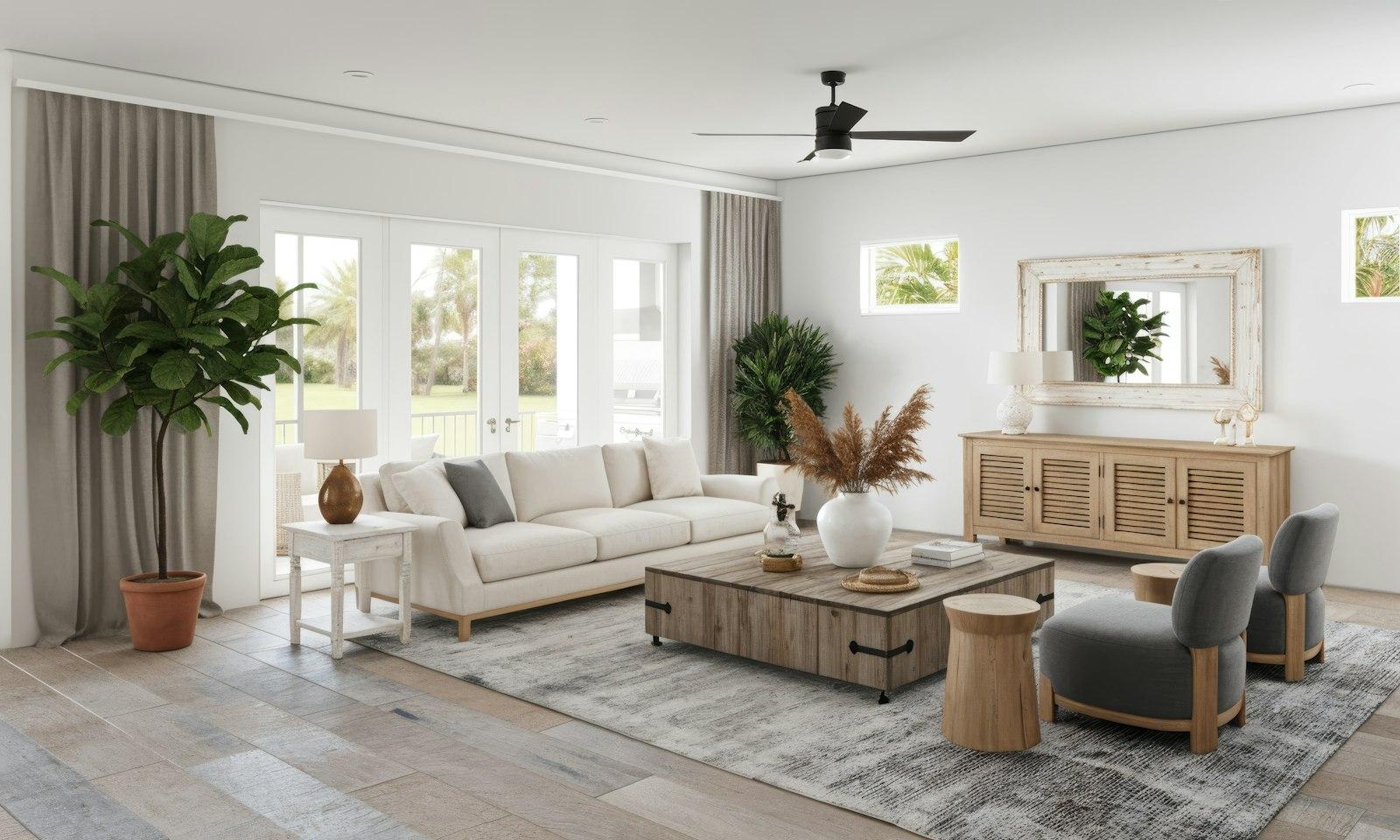
The good life used to be a question. Now it is a catalogue. Open almost any lifestyle magazine, scroll through almost any interiors feed, and you will find it laid out in pale oak and linen: the uncluttered kitchen, the morning light across a ceramic cup, the bicycle leaning against a whitewashed wall. Nobody in these pictures is asking what makes a life worth living. The answer, apparently, has been settled. It is a mood, and it can be furnished.
There is a respectable theory beneath the promise. The psychologist James J. Gibson coined the word affordance for what an environment offers the creature moving through it: a flat surface affords standing, a handle affords grasping, a ledge at knee height affords sitting. Design writers later took up the idea to describe how objects and rooms invite some actions and discourage others. A long table affords a dinner party. A sofa facing a screen affords an evening alone.
Our argument is that the lifestyle catalogue trades on a confusion between affordance and achievement. Rooms can invite; they cannot accomplish. Aristotle's flourishing life, still the most serious answer to the question of how to live, was an activity carried on over a whole lifetime, a matter of virtue exercised among others. Design can arrange the affordances for such a life, and sometimes does so humanely. It cannot supply the life itself, and when it sells its invitations as proof of arrival, it flatters us into thinking the hard part is done.
Further reading

Mimetic Desire in Stiff Card: How the Branded Shopping Bag Turns Taste into Endless Imitation
Following Girard, the branded bag works by broadcasting a desire we borrow from others, and design built to keep us imitating can never let wanting come to rest.
By Amina Patel—6 min read

Bauhaus Functionalism Was a Method, Not a Style, and Its Imitators Inherited Only the Style
The school's real legacy was a sequence of thinking about material, use and process; the geometry now sold in its name reverses that sequence and calls the result design.
By Amina Patel—6 min read
Purpose as Barthesian Myth: Why the Mission Statement Empties the Product It Claims to Ennoble
Read through Barthes's Mythologies, the purpose-driven brand dresses a commercial exchange as a natural moral fact, and the only honest answer is a product that can be checked.
By Elena Rossi—7 min read